Rajendra B. Aklekar
There is now some good news from Sion, Mumbai. Following the appeal to save the historic GIPR relics, 18 cast GIPR signs/signage have been removed from the old Sion structure and placed in safe custody. The work of removing the remaining wooden frames has been completed. Following this, the old station has been demolished to make way for new rail tracks. The existing platform 1 is now ready to be a double-discharge one.
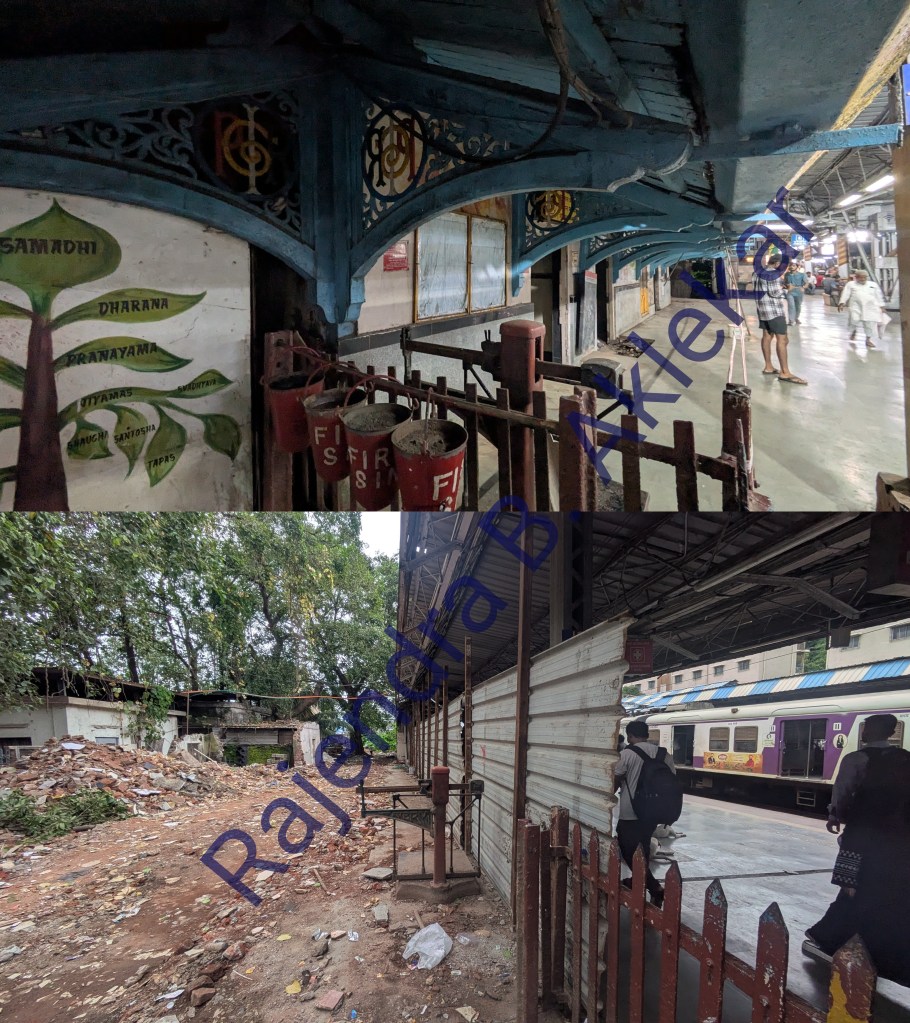
Importantly, the heritage material recovered from Sion will not be discarded but all the heritage items collected from the site will now be kept safely at the Kurla carshed for the time being, as per a top railway official from the railway board.
There is an even more encouraging development. The old structure, including its GIPR frames, are being proposed to be reused at the Lonavala Heritage Park as part of a heritage railway station.
This is precisely the kind of outcome that demonstrates why heritage appeals matter.
A heart-felt thanks to all those who made it happened, including the Office of Union Railway Minister Ashwini Vaishnaw, the Heritage Directorate of the Railway Board, the Rail Enthusisats Society, Mumbai Heritage and thousands of fans and followers who made noise about it.
The Bombay–Thane railway of 1853 was the first commercial passenger railway line in India and marked the beginning of the country’s modern railway age. Sion occupies a particularly important place in that story because the first sod of the GIPR line was ceremonially turned here in 1850.
Central Railway is now adding lines and a new platform at Sion station as a part of expansion. The objective was never to stop railway project works or prevent necessary infrastructure work, it was only to ensure that when an important historic railway structure has to be dismantled, its surviving elements are identified, documented and preserved rather than treated as scrap.
At Sion, that principle appears to have worked.
Eighteen GIPR cast signs have been saved. The wooden frames are being carefully removed. The heritage material is being placed in safe custody. And there is now a plan to give at least part of the structure a new life at Lonavala.
It is a small but significant victory for India’s railway heritage.


Nice,you are some of fine railwayCorrespondence who knows history of Mumbai Railway. Good to preserve our heritage.