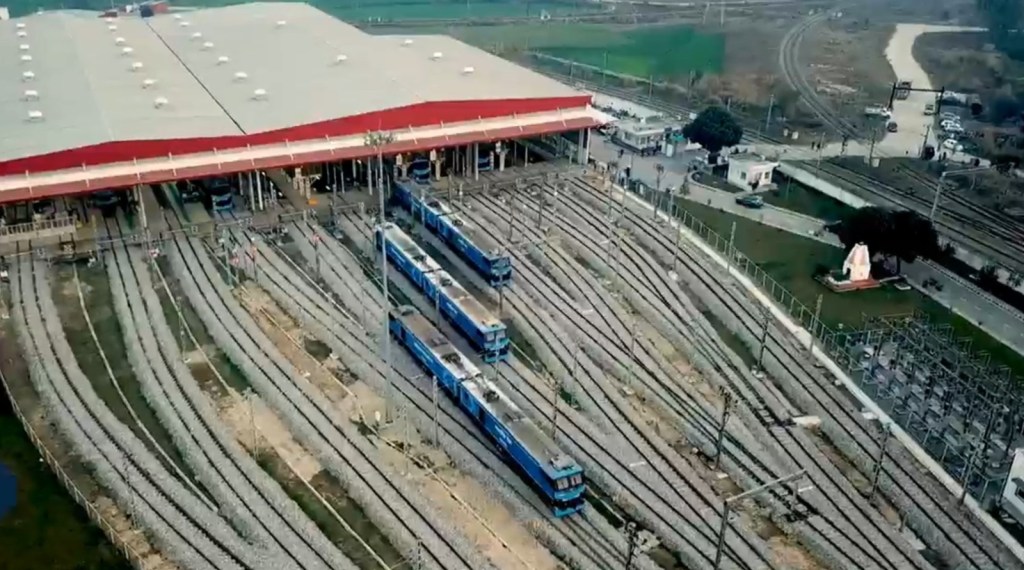
The renewal of Alstom’s five-year maintenance contract for 250 WAG-12B freight locomotives is more than a service agreement. It illustrates a fundamental shift in Indian Railways’ procurement philosophy: manufacturers are no longer expected to simply build trains—they are increasingly being asked to maintain them over much of their operational life.
The WAG-12B project itself was conceived as an integrated package. Alstom and Indian Railways established a manufacturing facility at Madhepura to produce the 12,000 HP electric locomotives and simultaneously developed a maintenance ecosystem to ensure their long-term reliability. The latest €107 million contract for the Nagpur depot reinforces this lifecycle approach, where the supplier remains responsible for performance after delivery.
Under the renewed agreement, MELPL will undertake comprehensive maintenance of the 12,000-horsepower WAG-12B locomotives, along with the upkeep of the associated depot infrastructure at Nagpur. The maintenance programme is aimed at ensuring high fleet availability, operational reliability, and efficient performance of the heavy-haul freight locomotives.
This model is now finding its way into other major railway projects, including Mumbai’s proposed air-conditioned suburban EMU procurement. The tender under preparation is expected to go well beyond just supplying trains. It envisages the selected manufacturer setting up two dedicated maintenance workshops – at Bhivpuri on Central Railway and Vangaon on Western Railway and taking responsibility for maintaining the fleet to defined performance standards over an operational life of up to 35 years. The Mumbai Railway Vikas Corporation (MRVC) has been working on it and since it is not just one-time train manufacture but a comprehensive package, there have been endless back and forth queries from manufacturers who have bid for the project, delaying the timeline.
But the concept is interesting and the implications are significant. Traditionally, Indian Railways purchased rolling stock and relied largely on its own workshops and depots for maintenance. Under the emerging framework, manufacturers have a direct stake in ensuring reliability, availability and lower lifecycle costs. This encourages better design, easier maintenance and faster resolution of technical issues because the builder continues to support the product long after it enters service.
For Mumbai’s suburban network, where millions of passengers depend on reliable train operations every day, such arrangements could improve fleet availability and reduce breakdowns, provided contracts are carefully structured and performance is rigorously monitored.
The Alstom experience with the WAG-12B fleet offers a glimpse of this new direction. It suggests that the future of railway procurement in India may lie not in buying trains alone, but in buying guaranteed performance over decades.

