
Outgoing Mumbai CR Divisional Railway Manager Rajneesh Kumar Goyal has set an example and taken a few key decisions that changed CR Mumbai railway for the better
As Central Railway Mumbai Divisional Railway Manager Rajneesh Goyal leaves Mumbai after completion of his tenure to take up another responsibility, he leaves behind a legacy of his efforts of congestion-free and wider platforms. During my coverage as a transport journalist in Mumbai, he has been one of the officers who has been regularly responding to messages, calls and having conversations of what ought to be done and what not and the pressures of handling the Mumbai suburban railway network, one of the world’s busiest and congested ones.
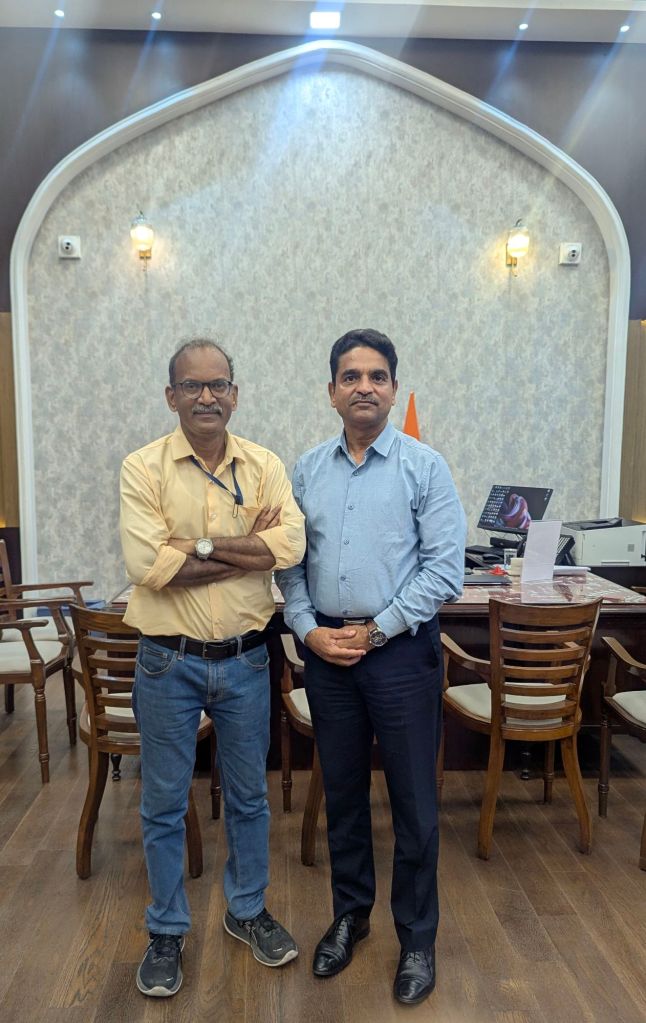
Amid heavy criticism, Goyal, since taking over in October 2022, has been consistently working on decongestion of stations and a few key projects that no other divisional manager had earlier taken up. As he leaves, a few mentions of what I gathered and assessed in my interactions with him.
Daring challenge of opening up Mumbai suburban railway
The Mumbai suburban network is a delicately balanced system. One small disturbance tips the scales and collapses everything. Yet, knowing this, Goyal opened up the system, shifted and moved working tracks to widen a congested platform at Thane. A 63-hour block meticulously carried out. Opening the country’s oldest, busiest rail network to conduct a surgery like this is unheard of.
Thane platform widening
The story at Thane was that platform 5 and 6 that catered to Up and Down fast suburban local trains and mail/express trains used to get extremely crowded due to the passengers of long-distance trains standing with luggage plus rush hour crowds. Thane station, being a junction, also gets passengers from the trans-harbour Thane-Vashi/Panvel line, leading to more and more people pouring onto this island platform. The idea was to shift the existing tracks of island platform number 5 to the west side and widen it wherever space was available. It was successfully executed in a 63-hour block, cancelling about 100 plus services. The width of the platform was widened between 2.5 to 3m, creating more circulating space on the platform. “I could manage it because in those 63 hours, Mumbaikars co-operated with me. Not a single call or complaint that day. Credit is due to Mumbaikars that they co-operated with us completely and we managed to finish in time,” Goyal said.
Making Dadar seamless
Another key decision was to make Dadar platforms a seamless station. “With two zones, there was duplication of platform numberings. WR has seven platforms starting from the west while CR has eight. The idea was to make the numbering continuous from 1 to 15 so that newcomers and those confused about the duplication of platform numbers have clarity,” he said.
Dadar platform widening
Another important decision was the shutting down of Dadar slow trains to widen and expand platform eight and move Dadar locals to Parel. The earlier narrow platform had been a death trap for commuters with local railway officials and railway police at wits’ end about handling the situation. The masterstroke of closing Dadar slow locals and using the entire platform for passenger use, earlier criticised sharply, proved immensely helpful.
Moving stalls from platforms
The other impossible achievement of his that I know of is the shifting of stalls. The railway canteens on platforms have been stubborn and it is given that shifting or shutting them is not possible. Yet today, most of the stalls on island platform have been closed and moved to the end of the platforms where there is no congestion. This has created a lot of space for circulating area of passengers.

As things moved and changed, I myself have written articles criticising many of his decisions based on commuter feedback as it led to immediate chaos and confusion. But slowly as the results came to effect, the benefits were visible. Taking a macro look, the changes have long-term benefits for the Mumbai suburban system as a whole.
“People think DRMs are Bhagwan Vishnu. They can change everything. Having worked in the field for so long, I have tried my best to work for the interests of commuters. There are so many suggestions and so much feedback directly from commuters. I have enjoyed my tenure here and was happy that could contribute to the city. Things are in for a change and Mumbai railway will be much better in the coming years. I tried to work to the best of my abilities here in Mumbai,” Goyal said.
 Rajendra B. Aklekar