
Nostalgia at 25: The story of beginnings and growth of Mumbai’s own railway board, a rail think tank.
12 July 2024. The Mumbai Railway Vikas Corporation enters its 25th year today. It is already 25 years! I have been a close witness of this organistion much before its formation and have been closely monitoring its workings and writing on the body, its projects and updates in bits and pieces as an outsider since Day One. The Mumbai Railway Vikas Corporation Limited (MRVC Ltd.), a public sector undertaking of Government of India under Ministry of Railways was incorporated under Companies Act, 1956 on 12th July 1999 with an equity capital of Rs. 25 crore shared in the ratio of 51:49 between Ministry of Railways and Government of Maharashtra. MRVC is involved in executing the suburban rail improvement projects under Mumbai Urban Transport Project (MUTP) as sanctioned by Ministry of Railways for enhancing suburban rail transportation capacity thereby reducing the overcrowding and meeting future traffic requirements. The corporation is also involved in the planning and development of Mumbai Suburban Rail system.
I remember around 1998, as a reporter with ‘The Daily’ newspaper, I had visited the then Minister of Railways (Independent charge) Ram Naik at his Goregaon residence for an interview and one of my first questions back then to him was when would the rail planning body proposed for Mumbai materialise? He had said “soon”.
This was the late 1990s. The suburban railways had been crumbling, upgrades were happening but in a scattered manner, a bit here and there as the focus and priority of the CR and WR was more on operations just to keep the mammoth train operations running.
Naik had originally been a rail activist besides being a politician. Back then, Ram Naik from Goregaon and another leader Ram Kapse from Kalyan always remained in the news over Mumbai suburban railway commuter issues. Naik, who in 1998 served as Minister of State for Railways (Independent charge) and later as Union Petroleum Minister (1999-2004) in the Atal Behari Vajpayee government, had made beginnings by setting up the Goregaon Pravasi Sangh in 1964 taking up rail commuter issues. Over the years, his efforts included pushing for a gradual increase in suburban train configuration in Mumbai from six cars to nine and eventually 12. Other initiatives included getting dedicated time slots for female vegetable and fish vendors in the luggage compartments. Later, he was also instrumental in starting ‘Special Ladies Local Trains’ in Mumbai, extension of suburban section of Western Railway up to Dahanu, 12-coach rakes, computerized reservation centers at various places, plans for quadrupling railway lines from Borivali to Virar and six lines from Kurla to Kalyan. As Minister of State for Railways (Independent charge), he executed his idea of a rail board-type body for Mumbai.
Unlike today back then, there was no independent railway beat in Mumbai journalism, but the news was already the talk of the town. The idea of having a rail board-type body for the lifeline of Mumbai was fascinating and it caught citizens’ imagination.
Suburban railway improvement had been on the party manifesto and Naik as minister had taken up the matter with respective government and railway officials. The then Shiv Sena-BJP alliance government led by Chief Minister Manohar Joshi and Deputy Chief Minister Gopinath Munde had held several rounds of talks with former prime minister I K Gujral and former railway minister Ram Vilas Paswan regarding the setting up of the corporation and the Union cabinet had granted the approval in 1997. But with the collapse of the United Front government and the subsequent elections, a formal decision could not be taken. It was only a year later after the BJP-led coalition government took over, it was decided to sign the MoU with the state government to formalise the body. It was on May 25, 1998, that the much-awaited memorandum of understanding for the setting up of a Mumbai Railway Vikas Corporation (MRVC) was signed between the railway ministry and the Maharashtra government.
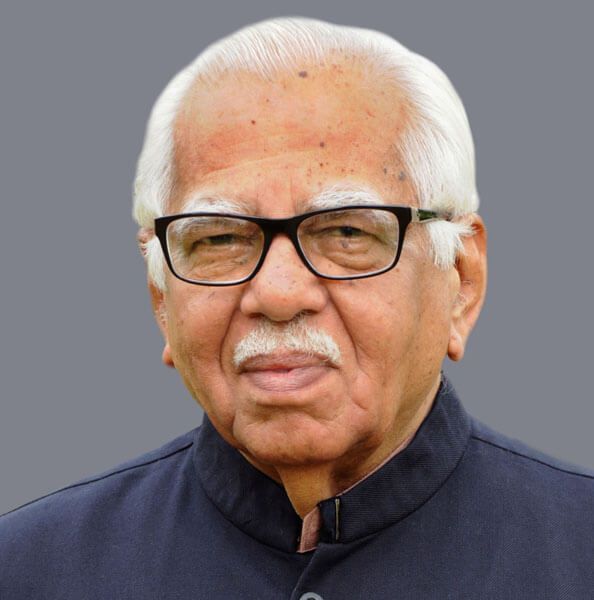
The MoU was signed by Railway Minister Nitish Kumar and Maharashtra Chief Minister Manohar Joshi. Besides Naik, Maharashtra Deputy Chief Minister Gopinath Munde, top state government and railway ministry officials were present on the occasion. The mandate of the corporation was to execute projects of the World Bank-sponsored Mumbai Urban Transport Project, meant to improve the suburban transport system. To start with, the corporation was to take up 12 priority projects on the suburban sections of Central and Western Railways.
The then Principal Secretary of the state urban department K Nalinakshan stated that the corporation was being set up with an initial capital of Rs 250 million. While Indian Railways provided 51 of the equity base, the state government had invested 49 per cent of the amount. The autonomous body MRVC had 11 members on its board, responsible for executing the railway projects in Mumbai city and the suburban section and was to function on both Central and Western Railways.
At the event, Maharashtra Chief Minister Manohar Joshi had requested Railway Minister Nitish Kumar that a separate railway zone be set up for Mumbai and its suburban areas for better implementation of railway projects. “Just setting up the MRVC was not enough. The problems of suburban commuters of this metropolis are different,” he said, adding that a separate zone for Mumbai railway will help streamlining the operations,” he had said.
The foundation stone
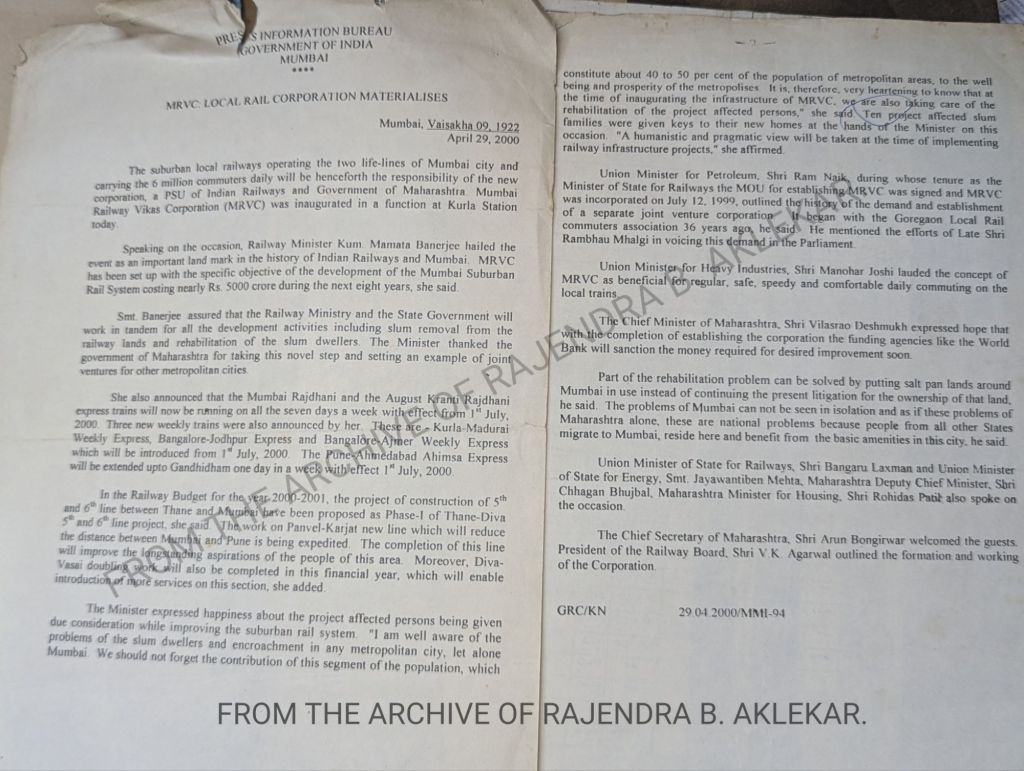
Subsequently, it was Railway Minister Mamata Banerjee who had laid the foundation stone of the MRVC in April 2000. I had attended the event and vividly remember that the foundation stone was at the corner of platform 9 at Kurla suburban station from where she had also flagged off a local train and made a few important announcements. (Detailed in Pic 1) She never addressed the media after the event and had left straightaway keeping us waiting.
The local train she had flagged was probably the last local train that left the platforms 9-10 after which the platforms languished and were eventually taken up for the elevated harbour line station construction. I always notice the spot of the foundation stone of MRVC even when I pass it today. Nothing remains there now.
Funding pattern
MUTP projects are implemented by taking loans from international banks and the funding pattern remains an equal amount of money from the Union government, allocated in the ‘pink book’ and an equal amount from the Maharashtra government.
Tasks and tales
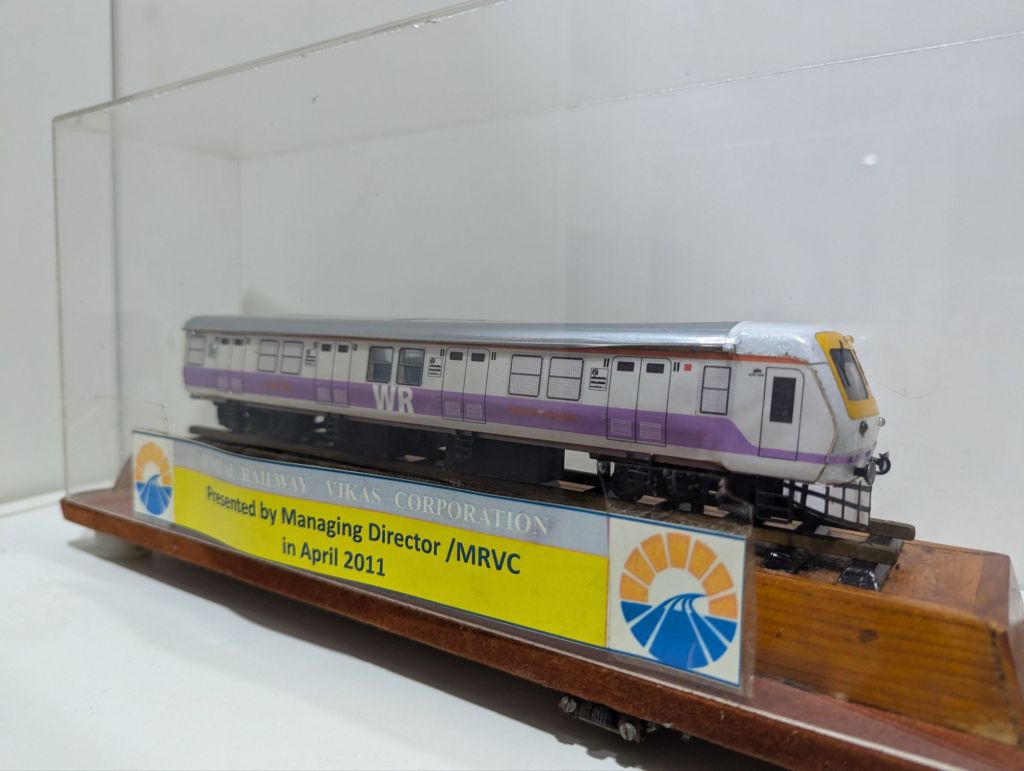
Under MRVC’s purview, Mumbai Urban Transport Project (MUTP) was initiated to enhance the carrying capacity of the suburban train network, starting with MUTP-I and currently, 25 years’ on, progressing with MUTP-3A.
Phase 1: The first big task was the conversion of the DC to AC. Over the years, Mumbai and surrounding areas had remained an island of some 350 to 400 Kms of Direct Current (DC) operations when the whole of Indian Railways had converted to over to 25 KV AC traction. This was not only hindering seamless movement of national trains, but leading to capacity constraints, delays as trains required special arrangements to enter Mumbai and also financial losses.
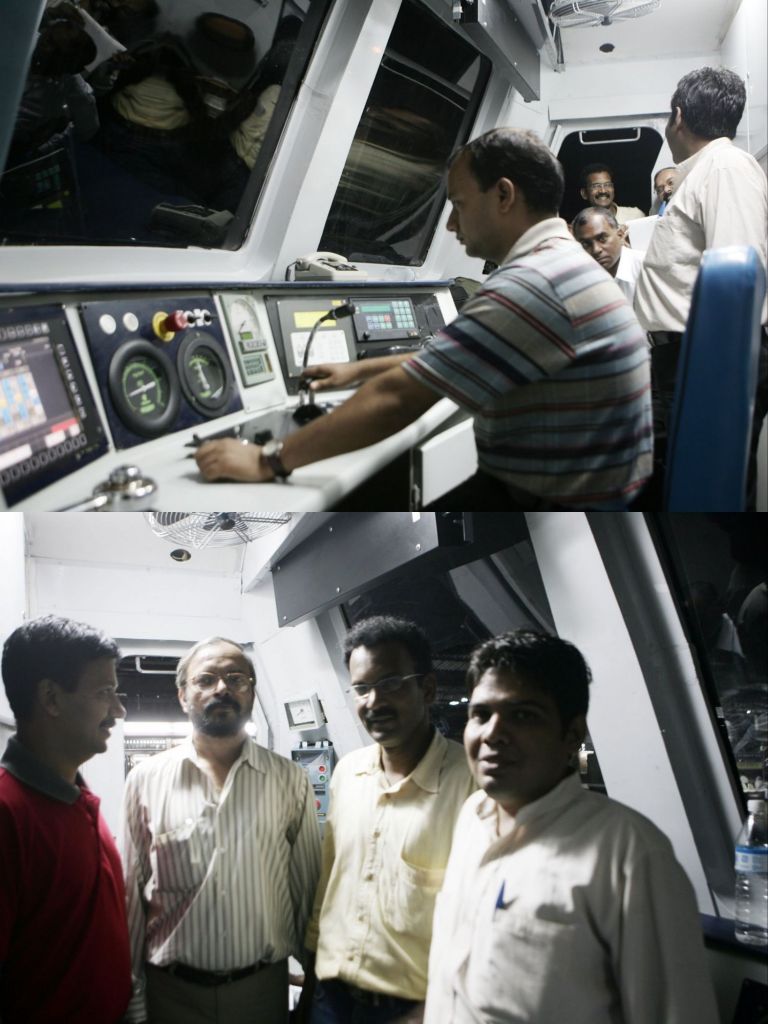
With the upgrade of the electric traction came better rakes with technology supplied by Siemens, and the entire system switched to 25 KV AC traction from the old 1,500 V DC traction. I remember going with German engineers and our railway team on the high-speed midnight trials of the first Siemens local train over the Vasai creek. It was the first new rake that had arrived in Mumbai.
New corridors were laid between Kurla and Thane and Borivali Virar to segregate outstation trains from suburban operations and extension of the suburban services from Virar to Dahanu. Phase one overall led to additional track km of 93km. A new carshed at Virar. The first phase of MUTP itself had led to 15,000 Project Affected Households being rehabilitated.

Phase 2: The phase two included completion of DC-AC conversion extension of new corridors between Kurla and CSMT, (now curtailed till Parel), Thane-Diva and Borivali to Mumbai Central (now curtailed till Bandra) and extension of harbour line to Goregaon, more stabling lines, station improvement and trespass control measures and additional rakes.
Phase 2 A: Under this, more rakes from Bombardier were inducted in the fleet, more foot over bridges and trespass control amenities, stabling lines were built and technical assistance to make suburban trains run faster.
Phase 2 B: This got down to the execution of Thane-Diva, Borivali-Bandra corridors and rehabilitation of 2,850 households.
Phase 2 C: This was about upgrading and extending platforms, more rolling stock, upgrading signals, overhead wires and building maintenance facilities and stabling lines.
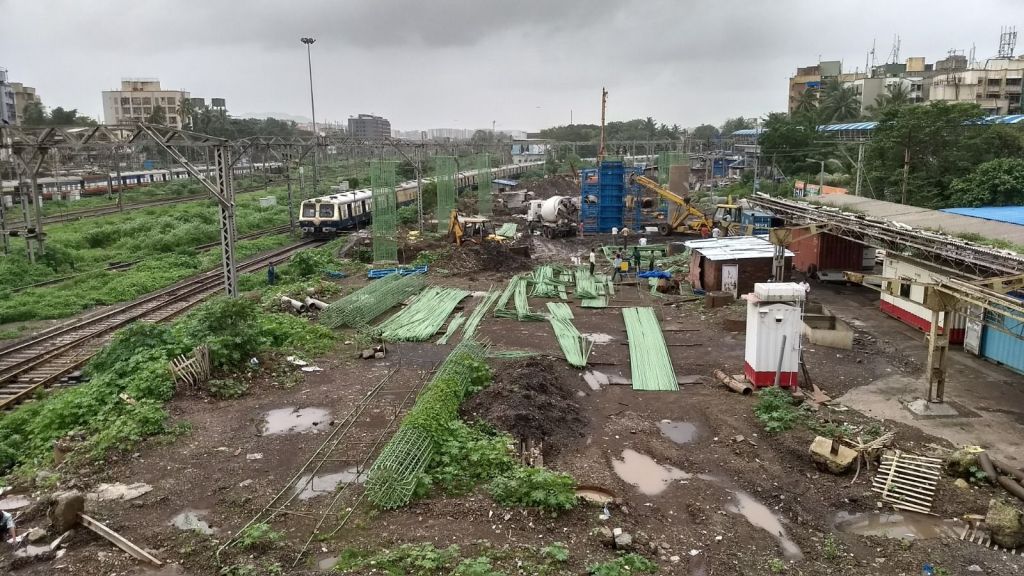
Phase 3: This includes the ambitious quadrupling of the Virar-Dahanu Road on Western Railway and a new suburban corridor between Panvel-Karjat on Central Railway, along with a new suburban corridor link between Airoli- Kalwa (elevated) on Central Railway, procurement of more trains and trespass control measures. While all works are on, the Kalwa-Airoli link has been stranded due to opposition from project affected people along the alignment backed by political support.
Phase 3 A: This ambitious project includes extension of harbour line between Goregaon-Borivali, 5th & 6th line between Borivali-Virar, 3/4th line between Kalyan-Asangaon and between Kalyan-Badlapur, Kalyan yard segregation and procurement of AC trains, which has been now stuck in a political slugfest.
Goof-ups, delays and issues
The MRVC has also been in the newspapers for goof ups and delays multiple times and had to face heavy criticism. I remember all of these as had reported on each of them to whichever newspaper I went, The new trains from ICF when procured first had been notorious for multiple issues, including its various parts falling off. First when they were inducted, wheels were a problem and many of them had to be sent back to the unit at Kalwa to get them straight, then the door of one such train fell off, seriously injuring a passenger of passing train, then couplings started parting, handles fell off with passengers injured and then last year seats and fans were found to b of poor quality, requiring replacements. But slowly and steadily, the purple/violet trains settled down and became the new lifeline of Mumbai.
The 18-km stretch of Kurla-Thane 5th and 6th lines took 15 years to complete, with partially the blame on the delay in shifting the families that occupied land near Thane and Vikhroli. Then there was a misalignment of tracks near Bhandup, which took some time to set. The biggest other goof up was during the Thane-Diva 5th and 6th line project when a major error in tunnel alignment at Mumbra led to the entire project going back to the drawing board. Then there were issues with project-affected people occupying the land and land acquisition issues. In 2021, Commissioner of Railway Safety team had found that the derailment of six coaches of a CSMT-Andheri local train at Mahim had occurred due to the tracks being curved a few degrees more than prescribed standards. The work had been done by MRVC. The WR then fixed tracks and there have been no complaints since. A waste of a project was the Mahim scrapyard project built by the MRVC, the land for which has now been handed over to the Dharavi Redevelopment Authority. The MVA Maharashtra government post-Covid-19 had strapped the organisation of funds due to disputes with the Central government putting heavy pressure on it and raising a question mark on its existence. But the crisis was soon over and the MRVC only emerged stronger. Lessons were learnt and the problems were accepted and the MRVC has now come way ahead.
Triumphs and tribulations
The new-age MRVC has emerged as a winner and has taken challenges head-on and galloping with multiple million-dollar projects. Work on two of the most important projects currently on include the Karjat-Panvel new suburban corridor and the Virar-Dahanu quadrupling.
Karjat-Panvel project: The game changer Panvel-Karjat railway project is taking shape under MRVC’s Mumbai Urban Transport Project 3 (MUTP-3). The length of the new line is about 29.6km with five stations. The entire line has three tunnels, two rail flyovers, 44 major and minor bridges, 15 road under bridges and seven road over bridges. A total of three tunnels (total: 3,164 m), i.e. Tunnel-1 (Nadhal tunnel) of 219 m, Tunnel-2 (Wavarle tunnel) of 2,625 m, and Tunnel-3 (Kirawali tunnel) of 320 m are under construction as part of this project. The existing old line caters to goods and a few long-distance passenger trains. The new double line corridor will enable to run local trains between Mumbai to Karjat via Panvel. It will also work as catalyst of the fast-developing Panvel, Karjat and NAINA area. (Navi Mumbai Airport Influence Notified Area).
Vivar-Dahanu quadrupling: As the Western Railway tracks are being quadrupled between Virar and Dahanu by the MRVC, the lines along a few stretches are being realigned from their original pathway that was laid in 1860s now to sync with the new lines and to upgrade them. The historic work is being done with a mix of some novel engineering and advanced technology. The sheer scale of works that is building an entire new corridor is tremendous and is expected to complete by December 2026. As of June 2024, 29 pc work has been completed. The delay in this project has been due to litigation, mangroves and various permissions all of which are finally in place.
Besides these two key projects, the MRVC has been involved in several other projects big and small, various station upgrade projects, foot over bridges, and trespass control measures assisting Mumbai railway.
With so many projects on in Mumbai on the railway front and multiple ones on across the Mumbai Metropolitan Region, we are now in the middle of the biggest infrastructure makeover of the MMR region. The MMRDA is now building in Mumbai what is arguably I think the biggest metro rail network ever attempted at any given point of time by any country in the world that is 337 km of Metro rail with about 40 km line of line being built by MMRCL (underground). CIDCO is going to build another 80 km so the total Metro Network that is being built in the Mumbai Metropolitan Region is more than 450 km. These are not just parallel to existing lines but also criss-crossing the city and suburbs to new business hubs, to places where rail lines never went and commuting had been an issue. Since all of these projects are in planning and various stages of implementation, MRVC now needs to align itself to integrate and play a role for seamless commute between these new metro lines of the 21st century and the upgraded suburban lines of the 19th century to lead from the front. Amen!
 Rajendra B. Aklekar